Pop culture has long turned finance into a kind of religion – a mythology we often return to when we need to understand desire, risk, and power. Oliver Stone’s Wall Street (1987), Martin Scorsese’s The Wolf of Wall Street (2013), Adam McKay’s The Big Short (2015), and the television show Billions (2016 – 2023) have all invited audiences behind the closed doors of the financial sector. This world is built by men driven by greed coded as ambition. The narratives of each of these help us metabolize something too vast to fully comprehend; they turn systems and markets into human emotions. Each retelling of these systems reveals what we worship. The truth is it’s not just wealth – but it’s the myth of control that wealth seems to promise.
Chinese Republicans, leans into these long traditions of financial storytelling but through the voices of characters who have been historically pushed to the margins of the narrative. The play asks its audience to imagine what it means to inherit a myth that was never meant to include you – what does it cost to carve out a space inside a system meant for someone else?
The Masculine Myth of Finance.
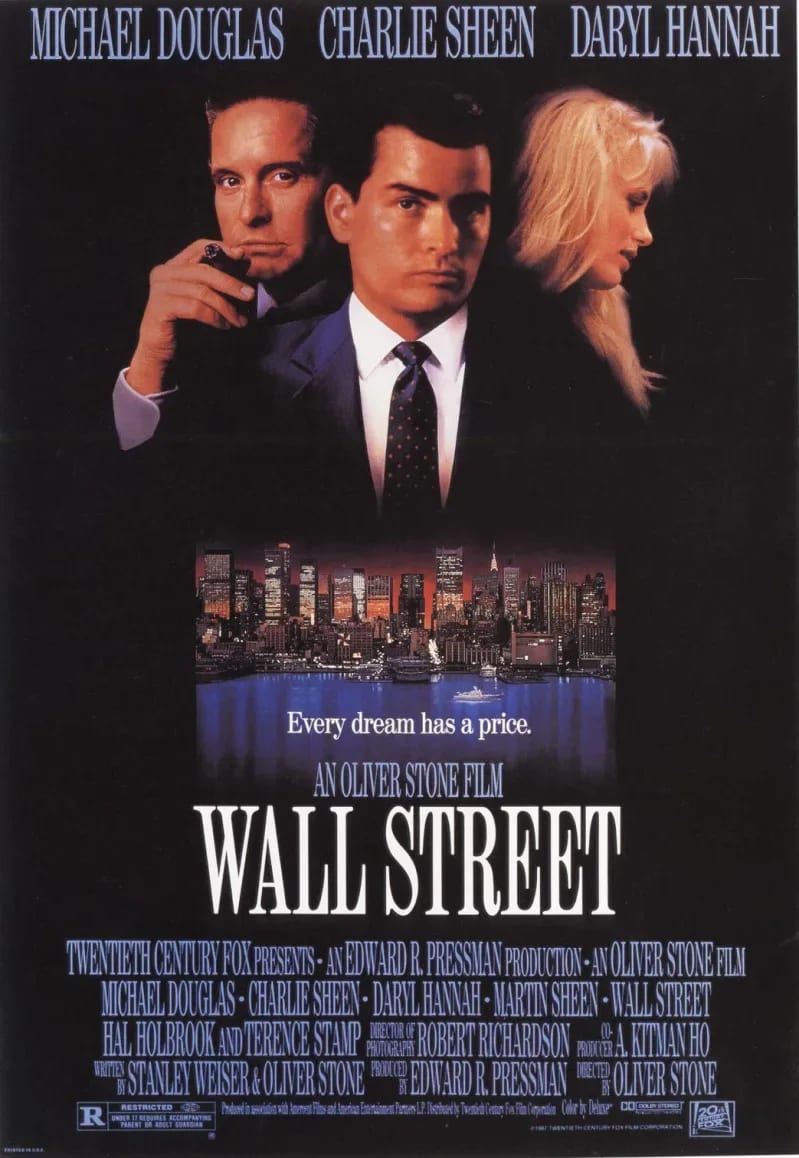
The mythology of finance in American culture has always been historically constructed by and for white men. In Wall Street, the male characters become archetypes of capitalism itself: the hungry young trader, the ruthless powerbroker, and the aging union father whose values belong to an older economic world. The film was made at the height of the 1980s’ deregulation and corporate expansion; the film reflects a moment when aggressive individualism was both celebrated as an economic strategy as well as considered an essential part of masculine identity. Bud Fox’s seduction by Gordon Gekko’s “greed is good” ethos introduces a new financial masculinity – one that is hyper-sexual, hyper-aggressive, and emotionally detached – one that equates power with domination and stability with accumulation. Stanley Weiser, who co-wrote the screenplay, has met more than one person who internalized Gekko’s energy, perhaps forgetting he goes to jail at the end of the movie. He described it in the Los Angeles Times: “A typical example would be a business executive or a younger studio development person spouting something that goes like this: ‘The movie changed my life. Once I saw it I knew that I wanted to get into such and such business. I wanted to be like Gordon Gekko.’” They were buying into the myth.
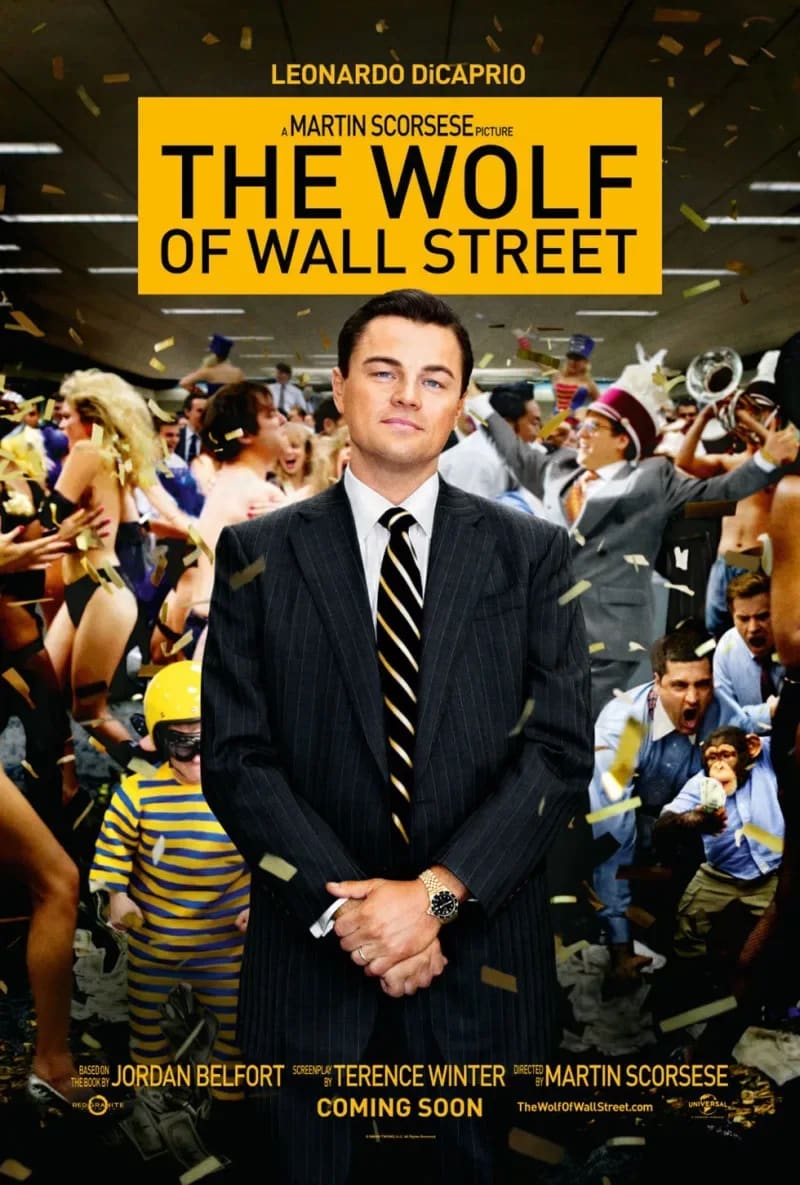
In The Wolf of Wall Street, Scorsese shepherded audiences into the finance world of the 1990s and whipped the myth into frenzied dramatic chaos. He does this by pushing this hyper-masculinity to the absolute limit. The world of the character of Jordan Belfort, played by Leonard DiCaprio, is one of excess – women are objectified, bodies consumed, ambition weaponized – and the trading floor is turned into a playground for men who believe their appetites are the measure of their power. Belfort declares, “There’s no nobility in poverty. I have been a rich man and I have been a poor man. And I choose rich every time.” While the movie was made after the 2008 financial crisis, Scorcese’s ethos as a director – to not judge his characters – lets the story be told without the burden of hindsight. There is no moralizing, just the depiction of bacchanalia and its eventual consequences. In the book Scandalous Economics, Elizabeth Prügl describes how the financial crisis began to shape the stories we tell:
The images of disgraced bankers testifying before Congress, Bernie Madoff going off to jail followed by a coterie of accomplices and insider traders, and the public outrage over outsized pay packages of people who ruined the economy for some sounded the death knell of Wall Street machismo. That is, these images were interpreted as the fall of a particular form of masculinity that had gained ascendance in the 1980s.
But the Wolf of Wall Street was released in 2013 and not everyone reacted to its characters’ bad behavior with disdain. In Business Insider, one journalist recounted seeing the film amongst a “finance-heavy audience” next door to Goldman Sachs. The audience reaction was “gleeful,” peppered with cheers for everything from drug use to protecting guilty coworkers from consequences. The myth is so attractive that it can become difficult to look past the decadent excess to the criminal behavior.
In the television show Billions, finance mutates into a new register—one rooted less in excess and more in psychological warfare. Set in a post-2008 landscape of increased scrutiny and regulation, the series imagines finance as a duel between men who treat strategy as seduction and power as performance. Masculinity becomes cerebral, cold, and weaponized. As Rachel Syme in The New Republic describes it, “The show is forever switching which of these two men has the upper hand, on both a moral and tactical level, so that rigid definitions of right and wrong no longer apply.” Here, the myth is more focused on the internal qualities of masculinity as opposed to its opulent trappings.
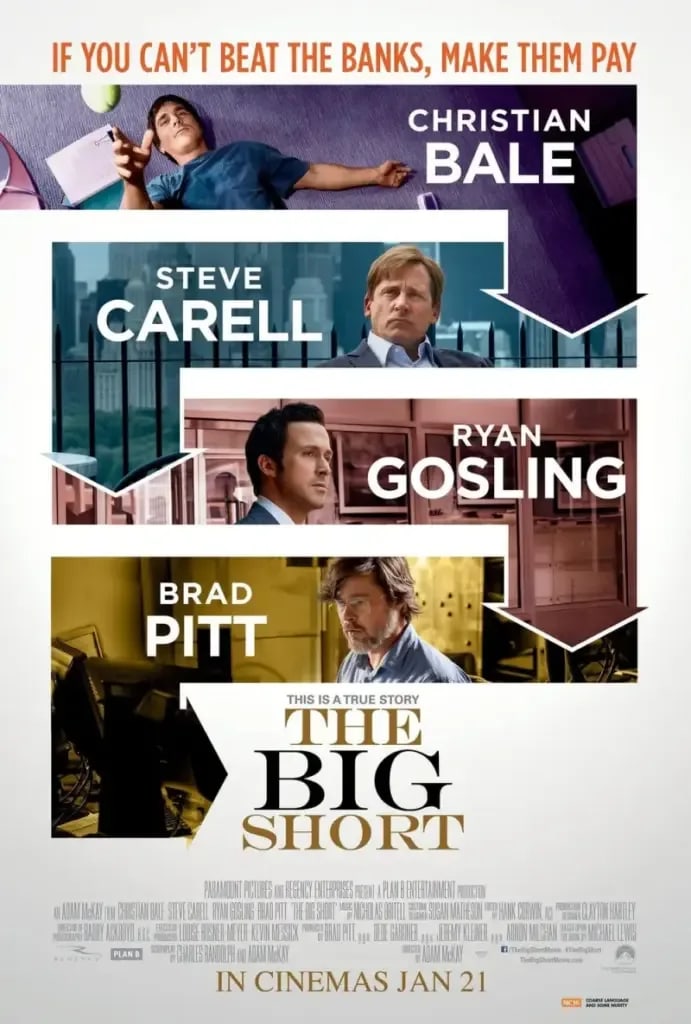
In The Big Short, Adam McKay uses a docudrama style and moments of direct address to give the audience more opportunities to understand the financial machinations as the story unfolds. The financial world becomes a dark comedy—a way of processing the absurdity and devastation of the 2008 crisis. Outsiders stare directly into the machinery of global finance and see denial, blindness, and unchecked arrogance. Like The Wolf of Wall Street, The Big Short is based on a true story. Its tone, style, and accuracy to real life events make it into a more useful counter-narrative to the myth so often found in similar settings.
Dispelling the Myth.
When looking at the stories in pop culture leading up to the present-day exploration in Chinese Republicans, we have internalized what to expect of this specific setting: powerful (white) men, dubious if not illegal schemes, and the furnishings of wealth. Women and people of color are on the margins or present as a foil, prop, or tool. Playwright Alex Lin is turning the genre on its head simply by shifting the focus to who else is present and in doing so continuing to fracture the allure of the finance world’s myth of masculinity. While these movies and television shows have differed and evolved, the motivations of their characters are unified around greed. What they want is more for the sake of having more, and it is an individualistic endeavor. In Chinese Republicans, the pursuit of success is the pursuit of survival and safety. The accumulation of wealth means securing a stable life and future for themselves and their families. For them, working in this world is a means to an end that requires adaptations to a norm we don’t see white, male protagonists having to make, much less consider.
The system is shaped and sustained by men like Belfort who behave as if the rules don’t apply to them. It teaches people to either emulate that bravado or get out. But as a woman, you can never go as far as the men do. As Phyllis in Chinese Republicans notes, “You still have to wear makeup, don’t you? You still have to fix your hair, wear the right shoes, be feminine enough without being a woman.” Their identities are scrutinized, translated, and leveraged in comparison to these male archetypes we have come to know in pop culture.
For them being inside this world means belonging is never neutral; belonging is a currency unto itself – one that must be earned, performed, and negotiated. If the financial world is a mythology built on risk and reward, these characters gamble not only with capital but with identity. Their bodies, accents, and emotional lives become commodities in an invisible marketplace of “proving yourself.” Iris’s insistence that Katie adopt the “right” Mandarin— “the one they use for business”—reveals how identity can become a form of labor. Iris’s cutting mimicry of Katie’s accent shows how fluency can become a gatekeeping mechanism, even inside communities that should offer refuge. This is the emotional cost of entering a narrative built without you.
Ultimately, the myths of finance created by pop culture illuminate a world defined by masculine power and structural exclusion. Chinese Republicans challenges that legacy by placing Asian women at the center of a narrative historically denied to them. Their journey through the financial sector reveals not only the gendered logic of the system but also the emotional labor required to navigate it. The play reframes the mythology of money, asking what it means to inherit a story that was never written for you—and what it might take to transform it.